Running a website takes time. You have to publish useful content, maintain the site, and keep your audience engaged. If your website receives relevant traffic and covers a clear niche, you may also be able to work with businesses that want to contribute articles or reach your readers.
Finding those businesses is often the difficult part.
Guest post buyers include SEO agencies, digital marketing professionals, link-building specialists, and businesses looking for relevant publishing opportunities. They may be interested in contributing original articles to your website, provided the content meets your editorial standards and the terms work for both sides.
If you own a blog or publication and want to attract more buyers, this guide explains where to look, how to present your website, and how to build productive relationships with potential clients.
What Are Guest Post Buyers?
Guest post buyers are individuals or businesses looking for opportunities to publish content on websites they do not own. Some want to promote their expertise, reach a new audience, or build relationships with publications. Others work with clients who need relevant content placements as part of a broader marketing campaign.
For example, an SEO agency working with a software company might look for technology blogs that accept useful articles about SaaS products, software development, or business automation.
A publisher whose website covers those subjects could be a suitable match, provided the proposed article fits the site's audience and editorial guidelines.
Guest post buyers do not all have the same requirements. Some prioritize niche relevance and audience quality, while others have specific budgets, geographic preferences, or content requirements. Understanding these differences helps you find buyers who are a better fit for your website.
1. Make Your Website Attractive to Potential Buyers
Before looking for guest post buyers, make sure your website is ready to be evaluated.
A buyer may review your homepage, recent articles, traffic estimates, and overall content quality before deciding whether to contact you. A poorly maintained site with little useful content can make a negative first impression.
Start with these basics.
Publish useful content consistently
Your website should have a clear subject and enough relevant content to demonstrate what it offers readers. You do not need to publish every day, but your articles should provide useful information and reflect the site's main niche.
Avoid filling your blog with unrelated topics simply to attract more potential buyers.
Make your niche clear
A focused website makes it easier for buyers to understand whether their content would reach the right audience.
If you publish about web development, for example, organize your content around subjects such as programming, website performance, software tools, and development practices.
Maintain a professional website
Check your navigation, mobile experience, page speed, broken links, and contact information. Buyers should be able to understand your website without struggling to find basic details.
Know your website metrics
Keep track of available data such as organic traffic, ranking keywords, geographic audience, and engagement. Tools such as Google Search Console and Google Analytics can help you understand different aspects of your site's performance.
Third-party SEO tools may provide estimated traffic, Domain Authority (DA), or Domain Rating (DR). These can help with comparisons, but they should not be treated as exact measurements of audience quality or guaranteed ranking potential.
2. Find Guest Post Buyers Through SEO Agencies
SEO agencies are one potential source of guest posting enquiries. Agencies may manage content marketing and link-building campaigns for several clients, so they sometimes need relevant publishing opportunities across different industries.
Start by identifying agencies that work with clients in your niche.
For example, if you run a business technology blog, research agencies that serve SaaS companies, IT providers, or software businesses. If you publish about health and fitness, look for agencies with experience in that sector.
You can find potential agencies through search engines, professional networks, industry directories, and company websites.
When approaching an agency, explain what your website covers and why it may suit the type of content the agency produces. Provide your website URL and relevant publishing details rather than sending a vague message asking whether they buy guest posts.
Keep your outreach professional and respect any contact preferences published by the agency.
3. Connect With Link-Building Specialists
Link-building professionals often research websites that are relevant to a client's industry. If your publication covers a clear topic and maintains useful editorial standards, it may be worth adding to their list of potential publishing partners.
You can find these professionals by researching SEO communities, agency websites, professional groups, and discussions about content outreach.
Before contacting someone, check whether they work in your niche and whether your website could serve their clients' audiences.
It is also important to distinguish between legitimate editorial collaboration and requests for links designed solely to manipulate search rankings. Google's spam policies address link schemes intended to influence rankings, including certain paid link arrangements.
Set clear rules about content quality, external links, sponsored material, and disclosure. This helps you protect your publication while making your terms easier for prospective buyers to understand.
4. Use a Guest Posting Platform to Discover Buyers
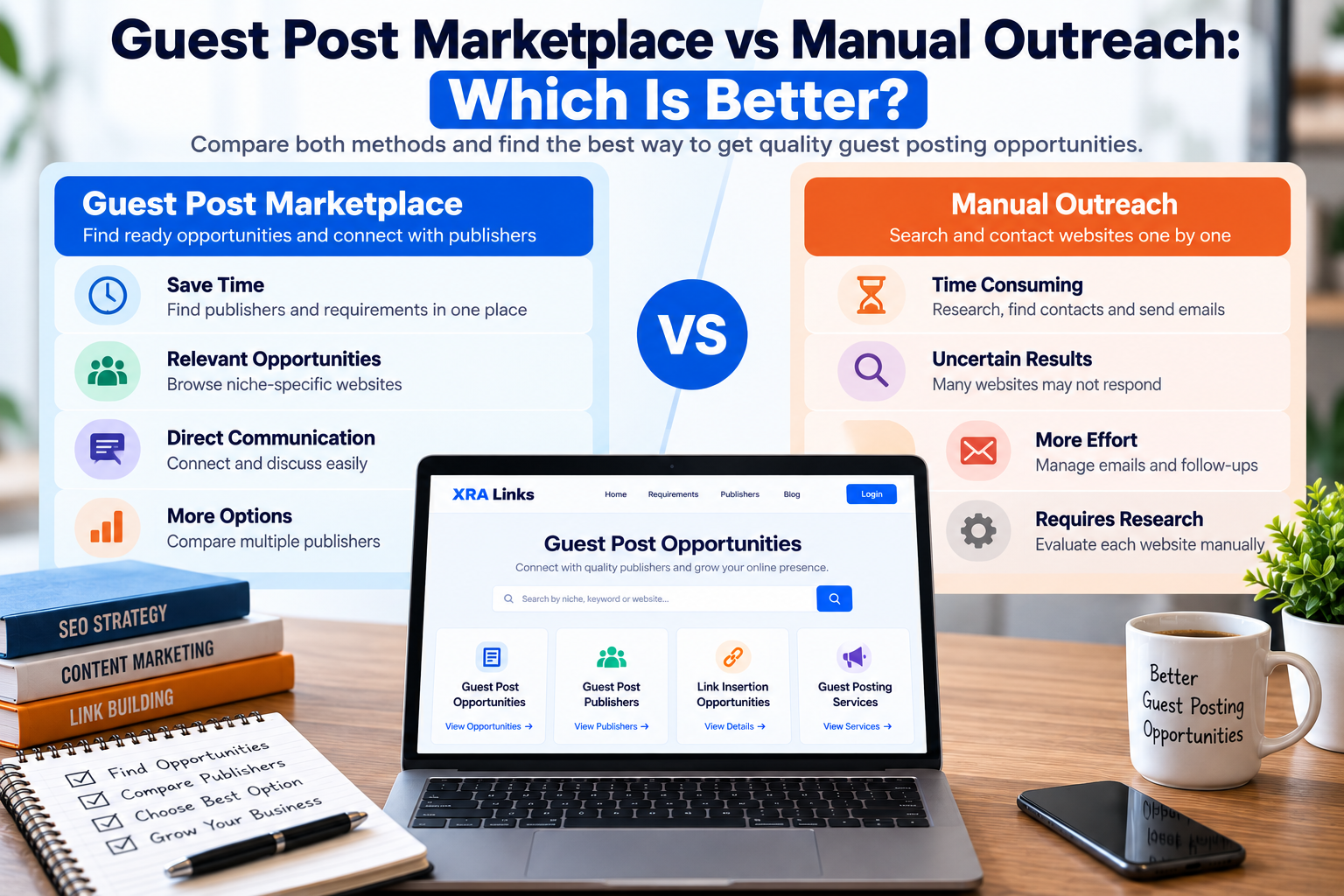
Manual outreach can work, but it takes time. You may need to research agencies, locate contact details, send messages, follow up, and maintain a spreadsheet of conversations.
A guest posting platform can provide another way to connect with people already looking for publishing opportunities.
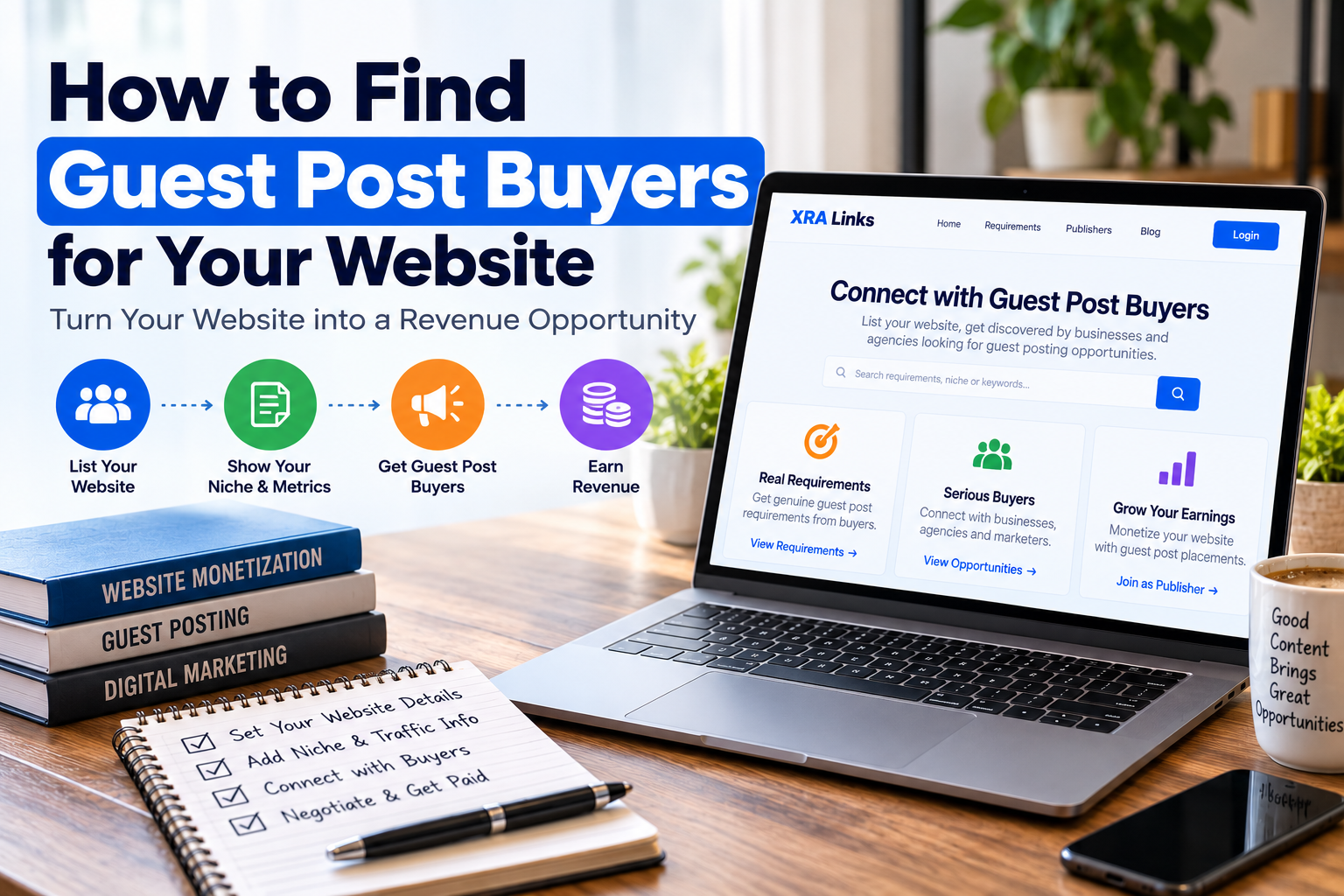
XRA Links is designed to connect guest post buyers and publishers. Buyers can share their requirements, and publishers can discover relevant requests and respond with offers.
If you own a website, start by exploring the guest post publishers page. You can also review the requirements section to see the type of opportunities shared through the platform.
For publishers, this approach can reduce the need to find every potential buyer independently. Instead of relying entirely on cold outreach, you can look for requirements that match your niche, website quality, and commercial terms.
The key is to respond selectively. A buyer seeking technology publications is unlikely to be a good fit for a website that mainly covers home gardening. Relevance matters to both sides.
5. Create a Clear Publisher Profile
When buyers compare several websites, they need enough information to decide which ones deserve further attention.
Prepare a concise publisher profile that describes your site accurately.
Include details such as:
- Website URL and primary niche.
- Main topics covered by the publication.
- Available traffic information and its source.
- Target audience or major visitor locations, where known.
- Relevant SEO metrics, clearly identified by their source.
- Types of articles you accept.
- Content requirements and editorial restrictions.
- Pricing and estimated turnaround time, if applicable.
Do not exaggerate traffic, invent performance figures, or present third-party estimates as verified analytics.
You should also explain what you will and will not publish. For example, you might accept software tutorials and business technology articles but reject unrelated promotional content.
Clear information helps buyers assess your website before starting a conversation. It can also reduce repeated questions about basic terms.
6. Set Reasonable Guest Post Prices
Pricing depends on several factors, including the niche, audience, editorial workload, content requirements, and nature of the placement.
A specialized industry publication may offer a different proposition from a broad lifestyle blog. Similarly, an arrangement that includes researching, writing, editing, and publishing an article involves more work than reviewing a ready-to-publish draft.
When deciding your prices, consider:
Content creation: Will you write the article, edit a buyer's draft, or accept a finished submission that meets your standards?
Editorial workload: How much time will you spend reviewing facts, checking links, and preparing the article for publication?
Audience relevance: Does your website reach the kind of readers the buyer wants to engage?
Placement terms: Is the content sponsored, how will it be disclosed, and what are the rules for external links?
Ongoing responsibilities: Are revisions, updates, or other services included in the agreement?
Avoid setting prices based only on DA or DR. These metrics do not capture every factor that determines the value of a publishing opportunity.
For paid placements, establish appropriate sponsorship disclosures and link attributes. Google recommends using rel="sponsored" or rel="nofollow" for qualifying paid links. Selling links that pass ranking credit in exchange for payment can create policy risks.
Your goal should be a transparent agreement that compensates you fairly for legitimate publishing work without compromising your website's quality.
7. Respond to Buyer Requirements Professionally
When a buyer posts a requirement, read it carefully before responding. Check the niche, requested metrics, budget, content format, and any special conditions.
A useful response should explain why your website fits the requirement.
For example:
"Hello, our website covers web development, software tools, and technology for businesses. We can review an original article proposal in these areas. Please share your preferred topic, content requirements, and placement terms so we can confirm whether it is a suitable fit."
Adapt the message to the actual request rather than copying the same response everywhere.
If the buyer asks for traffic data or audience information, provide accurate details and explain how the figures were measured. If your website does not meet a particular requirement, be upfront about it.
Professional communication helps establish trust and makes it easier to agree on the next steps.
8. Build Relationships Instead of Chasing One-Time Orders
A buyer who has a positive experience may return with another suitable requirement. However, repeat business depends on the quality of your work and whether your website continues to meet the buyer's needs.
Make the process straightforward.
Respond within a reasonable time, clarify the terms before accepting an assignment, and communicate any delays. Review the submitted article properly and make sure it follows your editorial policy.
Keep records of previous conversations, agreed prices, publication dates, and any commitments. If a buyer returns, these records make it easier to understand the history of the relationship.
Do not promise permanent publication or specific search rankings unless the terms and circumstances genuinely support such a commitment. Explain your policies clearly before accepting payment.
9. Common Mistakes Publishers Should Avoid
Focusing only on high SEO metrics
High DA or DR does not automatically mean a website has a relevant audience or good editorial standards. Consider the entire publication rather than one number.
Accepting unrelated articles
Publishing content that has little connection to your niche can weaken the usefulness and consistency of your website. Evaluate every submission against your editorial guidelines.
Providing inaccurate website information
Buyers need reliable details to evaluate a potential placement. Be clear about the source and date of traffic figures, and never inflate your metrics.
Ignoring link policies
Do not accept every requested link without reviewing its destination and purpose. Sponsored content should be disclosed appropriately, and paid links should be qualified according to applicable search engine guidance.
Depending on one source of buyers
Direct outreach, professional relationships, relevant communities, and publisher platforms can complement each other. Relying on one source may limit the opportunities you discover.
Failing to define terms
Agree on pricing, content requirements, publication expectations, revisions, and disclosure before beginning work. Clear terms help prevent misunderstandings.
Frequently Asked Questions
How can I find guest post buyers for my website?
Research SEO agencies, content marketing professionals, and link-building specialists in your niche. Maintain a clear publisher profile, approach relevant contacts professionally, and explore platforms such as XRA Links where buyers can share publishing requirements.
Do I need high Domain Authority to attract guest post buyers?
No. DA is a third-party metric, not a direct Google ranking factor. Buyers may also consider niche relevance, content quality, audience fit, organic visibility, and editorial standards. Requirements vary from one buyer to another.
How much can I charge for a guest post?
There is no universal price. Consider the publication's audience, niche, content workload, editorial standards, and agreed placement terms. Research comparable opportunities and set transparent prices based on the work you provide.
Can small blogs find guest post buyers?
Yes. A small blog can appeal to buyers when it covers a specific topic and offers useful content to a well-defined audience. Be honest about your traffic and metrics, and focus on buyers whose requirements match your website.
Is selling guest posts safe for SEO?
It depends on how the content and links are handled. Paid links intended to manipulate rankings can violate Google's spam policies. Maintain editorial standards, disclose sponsored content appropriately, and qualify paid links using the appropriate attributes.
Find Relevant Guest Post Buyers With XRA Links
Finding guest post buyers becomes easier when your website has a clear niche, accurate performance information, and straightforward publishing terms.
Build a useful publication, identify the businesses that need content in your industry, and respond to requirements that genuinely fit your site. Over time, consistent communication and reliable editorial work can help you develop stronger professional relationships.
Visit XRA Links to explore guest posting opportunities, discover buyer requirements, and connect with people looking for relevant publishers. If you are ready to start, review the guest post publishers page and see how your website may fit into the community.