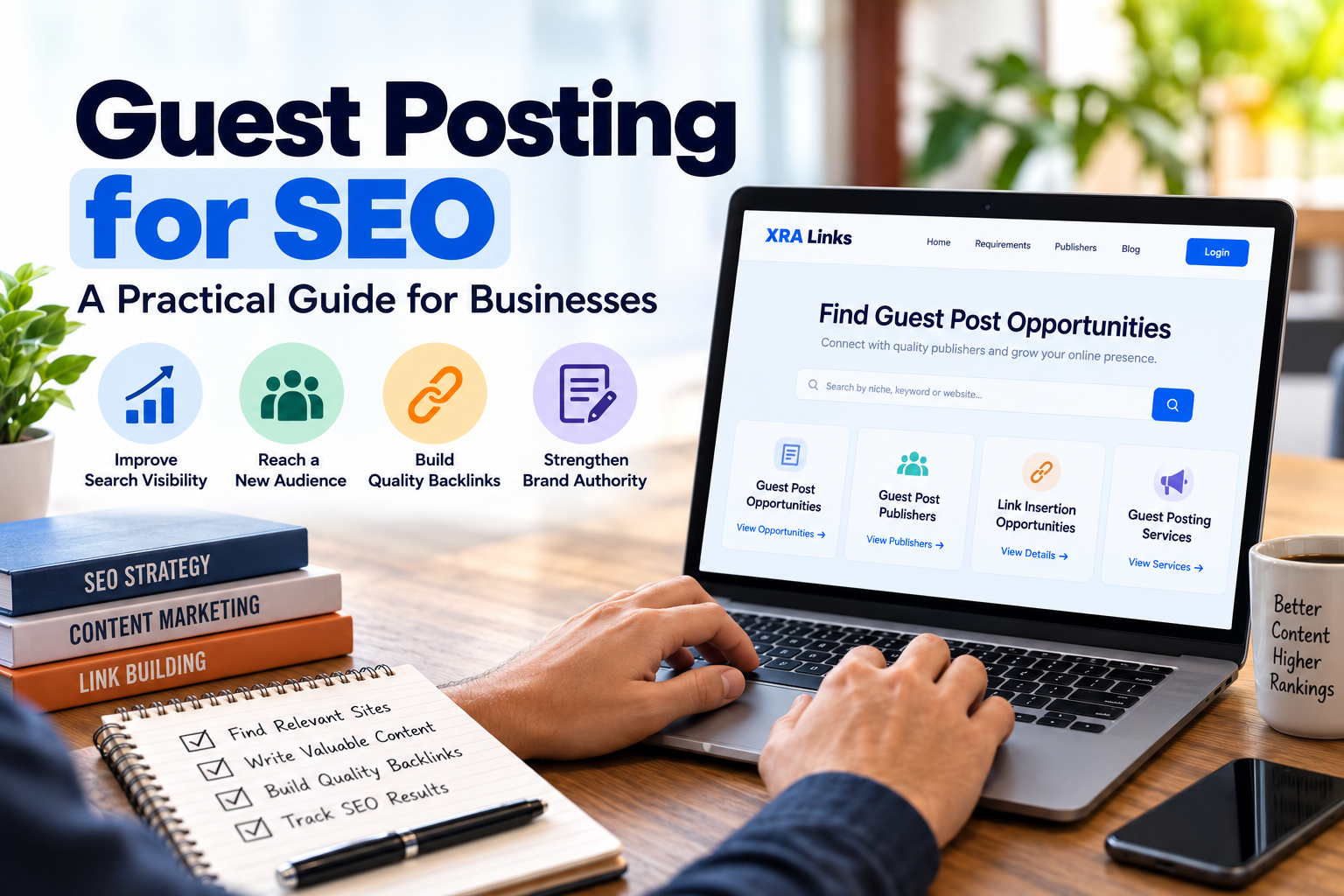
Guest posting is a way to share useful content with another website's audience. For businesses, it can create opportunities to reach new readers, build industry relationships, and attract relevant referral traffic. It can also form part of a broader SEO strategy when the focus is on genuine editorial contributions rather than links alone.
However, guest posting is not a shortcut to higher Google rankings. The results depend on the quality of the content, the relevance of the publication, and how the activity fits into your wider marketing goals.
If you are planning to use guest posting for SEO, this guide explains how it works, how to find suitable publishers, and what to consider before investing your time or budget.
What Is Guest Posting in SEO?
Guest posting involves writing an article for publication on a website other than your own. The host website receives content for its readers, while the contributor gets an opportunity to share expertise with a new audience.
For example, a web development company might write an article about website performance for a technology publication. The article could explain practical optimization techniques and, where editorially appropriate, reference a useful resource on the company's website.
Guest posts may include an author biography or links to relevant resources. These links can help readers discover additional information, although their SEO value depends on the circumstances and how the links are qualified.
A good guest post should make sense even if it contains no backlink. If the only purpose of the article is to place a keyword-rich link, the approach is unlikely to provide lasting value.
Why Do Businesses Use Guest Posting?
Businesses use guest posting for several reasons. The benefits can extend beyond traditional SEO metrics.
Reach a relevant audience
Publishing on an established website can introduce your business to readers who may not have discovered your website through search engines.
For example, an ecommerce development agency contributing to a publication about online retail can reach business owners who are already interested in improving their stores.
Build industry relationships
Working with editors, publishers, and other professionals can lead to future collaborations. These relationships may create opportunities for interviews, expert contributions, and other forms of useful exposure.
Attract referral traffic
Readers may follow a relevant link to learn more about a product, service, or topic. The traffic is most useful when the destination genuinely answers their questions.
Demonstrate expertise
A thoughtful article can show that your business understands a particular problem and knows how to solve it. This can support brand credibility, especially when the publication has a relevant audience and maintains strong editorial standards.
Support a broader SEO strategy
Guest contributions can help people discover useful resources on your website. However, guest posting does not guarantee better rankings, and paid links intended to manipulate search results can violate Google's spam policies.
The strongest approach is to treat guest posting as a content and relationship-building activity, not simply a way to collect backlinks.
How to Find the Right Guest Posting Websites
Choosing suitable websites is one of the most important parts of a guest posting campaign.
Start by identifying your target audience. Then look for publications that already cover the subjects those readers care about.
Search for websites in your niche
Google search operators can help you discover publications that accept outside contributors.
Try searches such as:
technology "write for us"digital marketing "guest post"business "contributor guidelines"ecommerce "submit an article"
Replace these examples with your own industry or topic. Some websites do not advertise guest contributions, so it is also worth researching relevant publications directly.
Review competing businesses
Look at the websites where businesses in your industry publish articles or share expert commentary. Their author biographies and external contributions may reveal relevant publications.
Do not assume every mention is a guest post. Confirm whether the article is a genuine editorial contribution, a sponsored placement, or another type of collaboration.
Explore a guest posting community
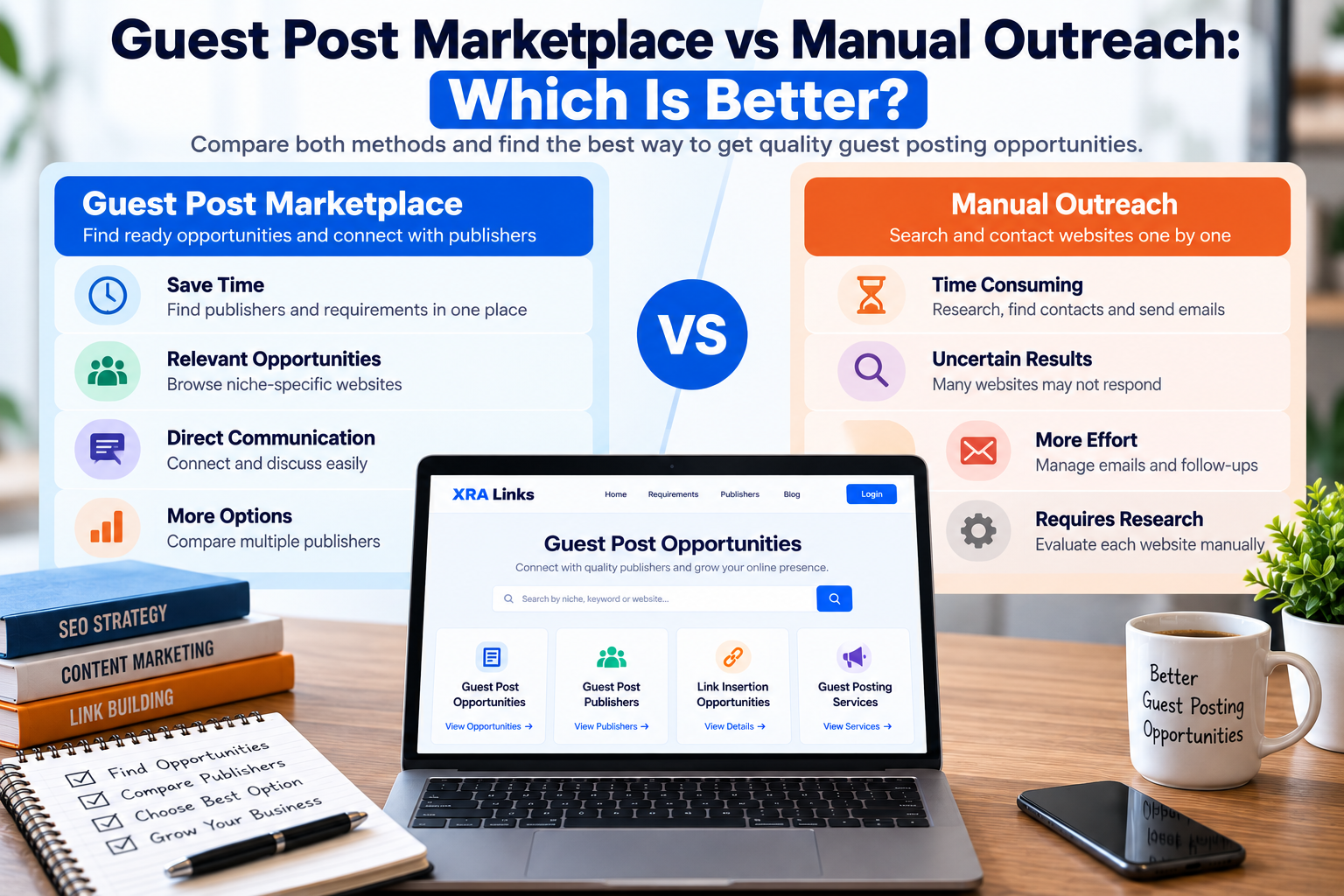
Manual research can take time, particularly when you need to contact many publishers.
XRA Links gives buyers and publishers a place to share guest posting and link-building requirements. Buyers can explore available opportunities, while publishers can review relevant requests and respond with their offers.
You can start with the guest post opportunities page or explore guest posting services to understand the available options.
If you own a website and want to connect with potential buyers, visit the guest post publishers page.
How to Evaluate a Website Before Choosing It
A long list of potential publishers is not necessarily a good list. Review each website before agreeing to contribute content or pay for a placement.
Check topical relevance
Read several recent articles and determine whether the website serves your intended audience. A technology business will usually have a stronger reason to contribute to a relevant technology publication than an unrelated general website.
Review content quality
Look for useful articles, clear editing, credible information, and consistent publishing standards. Be cautious if the website publishes large volumes of thin content across unrelated industries.
Examine organic visibility
SEO tools can provide estimates of organic traffic, ranking keywords, and search visibility. These estimates are useful for comparison, but they are not exact measurements of a site's readership.
Consider authority metrics carefully
Metrics such as Domain Authority (DA) and Domain Rating (DR) can help you compare websites. They are third-party metrics, not direct Google ranking factors.
A website with a lower authority score may still be relevant and useful if it reaches the right audience and publishes strong content.
Review outbound links and editorial policies
Check how the website links to external sources. Investigate websites where articles contain many unrelated commercial links or where editorial standards are unclear.
Before proceeding, confirm the publisher's content requirements, placement terms, and rules for external links.
How to Plan a Guest Posting Campaign
A successful campaign starts with a clear objective. Without one, it is difficult to decide which opportunities deserve your time and budget.
Step 1: Set a specific goal
Decide what you want guest posting to achieve. Your goal might be to introduce a new service to a relevant audience, attract referral visits, develop industry relationships, or publish useful educational content.
Avoid making rankings the only measure of success.
Step 2: Define your target websites
Create a shortlist based on niche relevance, audience, content quality, and your available budget.
For each website, record its URL, topic, contact information, editorial guidelines, and any relevant SEO metrics.
Step 3: Prepare useful topic ideas
Suggest topics that suit the publication's readers. Review existing articles first so that your proposal adds something new rather than repeating content the website has already published.
For example, instead of proposing a broad article about web design, a development agency might suggest a practical guide to improving checkout usability on mobile devices.
Step 4: Contact publishers professionally
Write a brief, personalized message explaining why your topic fits the website. Include a proposed headline and a short outline when appropriate.
If you are responding to a buyer's requirement, address the stated criteria directly. Explain what your website covers and provide the details the buyer needs to evaluate the opportunity.
Step 5: Create original content
Follow the publisher's guidelines and write for its audience. Use reliable information, clear examples, and relevant sources. Avoid inserting links that do not add value to the article.
Step 6: Track outcomes
Record which articles were accepted, published, or declined. After publication, monitor referral visits, engagement, and relevant business outcomes where measurable.
Use these results to improve your next round of outreach rather than assuming every placement will deliver the same benefits.
Guest Posting vs. Link Insertion
Guest posting and link insertion are two different approaches to contributing to another website.
A guest post is a new article written for publication on the host website. A link insertion involves adding a relevant link to an existing article, where the publisher agrees that the reference is useful and appropriate.
| FactorGuest postingLink insertion | ||
| Content | Usually a new article | Existing article |
| Main consideration | Topic and editorial fit | Relevance to the existing content |
| Preparation | Research, writing, and editing | Reviewing the page and proposed reference |
| Potential value | New audience and useful content | Helping readers discover a relevant resource |
| Main risk | Publishing content with little audience value | Adding a link that does not genuinely belong |
Neither approach guarantees SEO improvements. Both should prioritize relevance and reader usefulness.
If you are exploring existing-content placement options, see link insertion opportunities on XRA Links.
How Much Should You Spend on Guest Posting?
Guest posting costs vary depending on the publisher, industry, content requirements, and placement terms.
Some publications accept editorial contributions without charging a placement fee. Others charge for sponsored articles, content production, or additional services.
Before accepting an offer, ask what the quoted price includes. Confirm whether writing, editing, revisions, publication, and any ongoing obligations are covered.
Compare opportunities based on relevance and quality rather than choosing the cheapest website or the one with the highest DA or DR.
Paid links intended to pass ranking credit can create search-policy risks. Google recommends qualifying paid links with rel="sponsored" or rel="nofollow". Sponsored content should also be disclosed appropriately to readers.
If you are buying placements, make sure the arrangement serves a legitimate marketing purpose and that the terms are clear before you commit.
Common Guest Posting Mistakes to Avoid
Choosing websites only by SEO metrics. Authority scores cannot tell you everything about audience quality, editorial standards, or relevance.
Sending the same pitch to every publisher. Generic outreach makes it harder to demonstrate that your proposed content fits a particular publication.
Publishing thin or repetitive articles. Content should provide useful information that readers cannot get simply by reading a collection of generic summaries.
Ignoring paid-link policies. Buying links to manipulate search rankings can violate Google's spam policies. Understand the publisher's approach to sponsored content and link qualification.
Failing to verify the publisher. Confirm that the person offering a placement is authorized to arrange publication. Agree on the deliverables and terms in writing.
Ignoring results after publication. Track what happened and use the findings to make better decisions about future contributions.
Frequently Asked Questions
Does guest posting still work for SEO?
Guest posting can support audience development, referral traffic, and professional relationships. It may also help readers discover useful resources. However, it does not guarantee higher rankings, and publishing articles mainly to manipulate backlinks can violate Google's spam policies.
How many guest posts should a business publish each month?
There is no universal number. It depends on your resources, editorial standards, target audience, and available opportunities. Publishing fewer, more relevant articles can be more useful than producing a large volume of low-value content.
Are high-DA websites always better?
No. DA is a third-party metric, not a Google ranking factor. A relevant website with useful content and a genuine audience may be a better fit than a high-metric website with little connection to your industry.
Can small businesses benefit from guest posting?
Yes. Small businesses can use relevant publications to introduce their expertise to potential customers, build professional relationships, and attract referral visits. Start with a focused niche and a realistic budget.
How can I find guest posting opportunities more efficiently?
Combine targeted Google searches, competitor research, publisher guidelines, and organized outreach. You can also explore communities such as XRA Links, where buyers and publishers share guest posting and link-building requirements.
Start Finding Guest Posting Opportunities
Guest posting works best when it begins with a clear audience, a relevant publication, and content worth reading. Focus on the quality of each opportunity, understand the publisher's terms, and measure results beyond backlink counts.
If you are looking for publishers or want to share your own placement requirements, visit XRA Links. Explore guest post opportunities, connect with relevant publishers, and find opportunities that fit your content and marketing goals.